How deep should a French drain be?
Most residential French drains in Roseville sit about 18 to 24 inches deep, but the right depth depends on where the water is coming from, how your yard slopes and what it has to drain into.
People ask us this question more than almost any other. The short answer is a range, not a single number. Below we explain what sets that range on a real property, what you can check yourself, and when to call someone in.
The plain answer
For a typical yard drain that collects surface and shallow ground water, a trench of about 18 to 24 inches deep and roughly a foot wide is the usual starting point. The perforated pipe sits near the bottom on a bed of washed gravel, with more gravel over it and fabric wrapped around the stone to keep silt out. A drain that is there to protect a foundation or a basement wall may need to go deeper, down near the level of the footing. A shallow drain that only catches runoff along a patio edge can be less. Depth on its own is not the goal. The drain has to sit low enough to catch the water where it moves, and it has to slope steadily downhill to somewhere the water can leave. A deep trench with no fall, or one that ends at a dead spot, will hold water instead of moving it.
What changes the answer on a real property
Soil matters first. Much of Roseville and the surrounding Placer County area has heavy clay, and in some neighbourhoods there is a hard, compacted layer below the topsoil that water struggles to pass through. When water sits on top of that layer, the drain usually needs to reach it so the gravel can collect what is perched there. In looser soil, a shallower trench often does the job. The source of the water matters too. Runoff from a neighbour's yard or a slope behind the house moves near the surface, so a moderate depth along the high side of the yard can intercept it. Water that shows up as a damp crawlspace or seepage along a foundation wall is moving lower, and the drain has to go lower to catch it. Then there is the outlet. Every French drain has to end somewhere: a street curb outlet where allowed, a lower part of the property, or a dry well. The outlet sets a hard limit. If the exit point is only a foot below grade, the trench cannot drop much below that without the water having nowhere to go. On flat lots, which are common in newer Roseville subdivisions, getting enough fall over a long run is often the real constraint, not how deep you can dig. Finally, there are things already in the ground. Sprinkler lines, gas and electric services, cable runs and tree roots all limit where and how deep a trench can go. Mature oaks deserve particular care, since cutting their roots can harm the tree.
What you can check yourself
Start by watching the yard during and after a real winter storm. Note where water pools, how long it stays and which direction it comes from. Puddles that drain within a few hours after rain stops are rarely a problem. Water that stands for a day or more, soggy turf in summer near an irrigation zone, or a white mineral line on a foundation wall tells you more. You can dig a simple test hole with a post-hole digger, about two feet deep, in the wettest area. Fill it with water and see how fast it drains. If it barely drops overnight, you are likely sitting on dense clay or hardpan. If you hit a very hard layer as you dig, note how far down it starts, since that depth is useful information for whoever designs the drain. Check your downspouts as well. A surprising number of wet yards are caused by roof water dumping right at the foundation. Before you call 811 to have utilities marked, which is free and should happen before anyone digs, look for an obvious low point where a drain could empty.
When it needs a professional
Some situations go past a weekend project. If water is getting into a crawlspace or against the foundation, the drain usually needs to run deeper and closer to the house, and a mistake there can make things worse. Long runs on a flat lot need careful grading of the trench so the pipe keeps a steady fall, and that is hard to get right by eye. If the only practical outlet is a neighbour's side of the property or the street, local rules may apply. And if the yard is wet because the ground itself was graded toward the house, a drain may only treat the symptom. On a visit we look at where the water comes from, test the soil, find a workable outlet and mark utilities and roots before we suggest a depth and a route. Sometimes the answer is a deeper drain. Sometimes it is a shallower one combined with regrading or better downspout routing. We will tell you which, and why.
How depth fits with the rest of a drainage plan
A French drain rarely works alone. Our French Drain Installation work often goes together with Downspout Drainage, because roof water is one of the biggest loads a yard sees in a Roseville winter, and piping it away in solid pipe keeps it from saturating the gravel trench. Where there is no good place for the water to exit, a dry well at the low end can give it somewhere to soak in, sized to the soil we find. If the yard slopes toward the house, Grading and Regrading may need to come first so the surface sends water away before it ever reaches the drain. Getting the depth right is part of the job, but it only works when the source, the route and the outlet all make sense together. If you are unsure which of those is causing your wet spot, a visit is the easiest way to find out before anything gets dug.
Related questions
Yes. If the trench sits above the layer where water is moving, it will catch some surface runoff but miss the water that is soaking the ground below. In clay soil, a drain that is too shallow can also fill with silt sooner because it handles more muddy surface water.
No. A deeper trench only helps if the outlet is low enough to let the water out. If the drain is deeper than its exit point, water collects in the bottom of the pipe and stays there. Depth has to match the fall and the outlet.
The pipe needs a steady downhill fall along its whole length with no low spots where water can sit. A common guideline is at least an eighth to a quarter inch of drop per foot of pipe. On flat Roseville lots, getting that fall over a long run is often what decides the depth at the upper end.
Yes. Call 811 a few days before any digging so gas, electric and other buried utilities can be marked at no cost. Sprinkler lines are not marked, so it helps to know where your irrigation zones run before the trench is laid out.
Sometimes, but not always. If roof water from downspouts or ground that slopes toward the house is the cause, fixing those may solve it without a deep drain. When the water is moving underground against the footing, a deeper drain closer to the house is usually needed.
Services
How we can help in Roseville
French Drain Installation
Perforated pipe in a gravel trench, wrapped in fabric, graded to carry groundwater away from the house.
Learn more
Yard Drainage
Standing water in lawns and beds solved with catch basins, surface drains and regrading.
Learn more
Drainage Repair
Clogged, crushed or silted drains located, flushed, repaired or replaced.
Learn more
Sump Pump Installation
Pits, pumps and discharge lines for basements and crawl spaces that take on water.
Learn more
Downspout Drainage
Downspouts piped underground to daylight or a dry well so roof water stops pooling at the foundation.
Learn more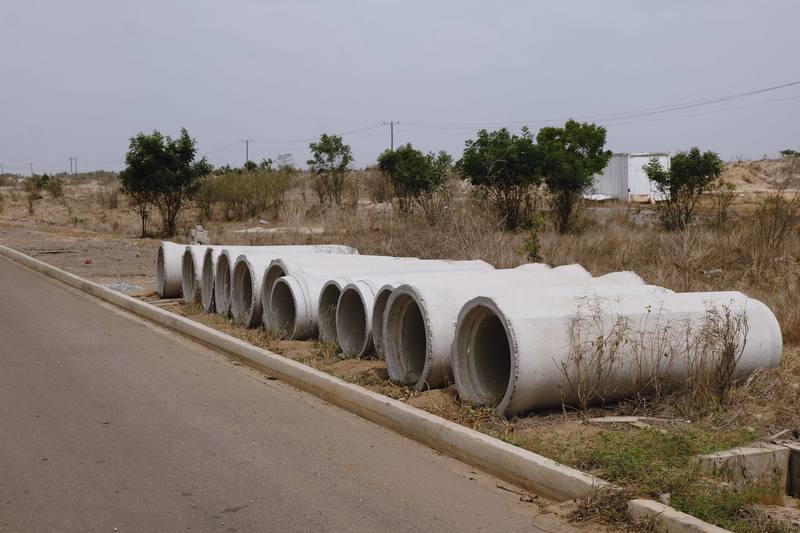
Dry Well Installation
Buried chambers that store and soak away roof and surface water where there is nowhere to drain to.
Learn more
Grading and Regrading
Soil reshaped so water runs away from the house and off the lawn instead of sitting.
Learn more
Channel Drains
Trench drains across driveways, patios and garage aprons to intercept sheet flow.
Learn more
Emergency Flooded Yard Drainage
When a storm leaves water pooling in your yard or against the house, we help get it moving and find out why it happened.
Learn more
Get started
Tell us where the water goes
Call (916) 010-0004 or send a message with a few photos of the wet area. We are open Monday to Friday 7 AM to 7 PM and Saturday 8 AM to 5 PM.